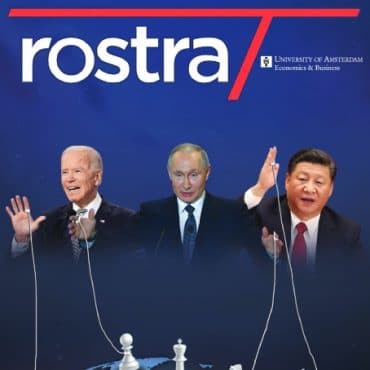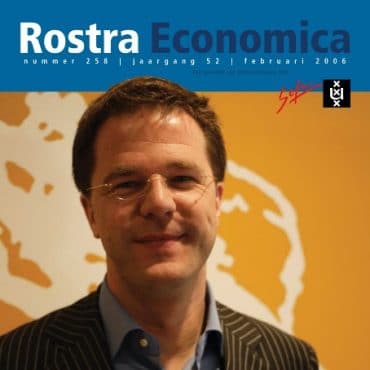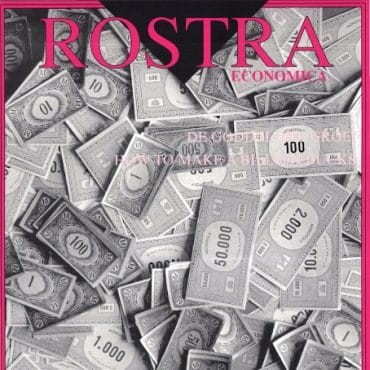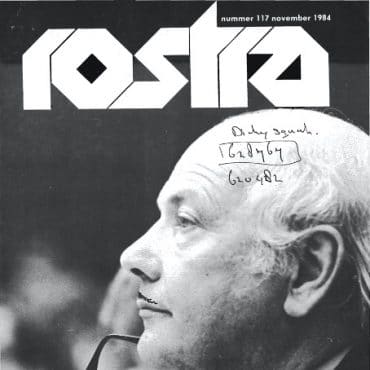
Rostra Economica
Rostra Economica is the magazine of the Faculty of Economics and Business and has been a part of student life since 1953. At Rostra, we cover the latest events and encourage our editors to write about the topics they personally find interesting. Beyond writing, we offer a welcoming community, the opportunity to conduct interviews and see your work in an actual printed magazine. Check us out at rostraeconomica.nl.
Ready to make your voice heard? Join Rostra Economica as an Editor! Explore our four columns below and find exactly where you belong.
Our Columns
Economics & Finance – Pál Lászlófi
Economics is present in more areas of our lives than we tend to notice, and this column exists to make that visible. Across its broad spectrum, editors explore everything from conventional economics to topics one might never think to connect it with.
The Economics & Finance column has been the beating heart of Rostra since 1953. To this day, it carries the founding instinct to think critically about the world’s numbers and examine the actions of the people behind them. It presents complex ideas in an engaging way, without compromising on depth.
Politics & Law – Dominika Rokosz
Economics never operates in isolation. Every market outcome — from housing shortages to work contracts — is shaped by political decisions and legal architectures. At the Politics & Law column, our editors examine how political power and legal design shape the economic world we live in.
We follow the forces that move markets: EU competition rulings, tax engineering, climate litigation, and the regulatory battles that determine who profits and who pays. We trace the lobbying behind legislation, the court cases that redefine industries, and the rules that quietly steer everyday economic life.
Our goal is to make these connections clear, urgent and human. Because behind every balance sheet lies a political story, and behind every law lies an economic consequence. We’re here to tell both — follow the news and the money.
Art & Philosophy – Daniela Darie
When we speak of economics, we often turn to numbers, graphs and models — but behind those tools lies a set of deeper questions that cannot be answered without philosophy. What does it mean to value something? Is rational choice truly “rational”? How do ideas about justice, freedom and morality shape the way markets function?
In this column, we explore the intersections between economics and philosophy: from the ethics of inequality and redistribution, to the philosophy of incentives, to the question of whether growth itself should be the ultimate goal. Philosophy may not offer tidy equations, but it gives economics its backbone — it asks “why?” before we ask “how?”
Alongside philosophy, art is a dynamic way of exploring economic realities. Art, in all of its meanings and manifestations, is a complex cognitive process that trains the human mind to look for paths not yet explored. Moreover, just like economics, art is an expression of public sentiment — a gateway to induce and understand societal circumstances.
In a world where policy decisions carry both mathematical precision and moral weight, art and philosophy are valuable tools for understanding complex economic dynamics.
Science & Technology – Lela Gavasheli
In a world where technological breakthroughs reshape our daily lives as quickly as cultural trends come and go, the Science & Technology column dives into the stories, questions and ideas at this intersection. From the influence of social media on how we express ourselves, to the ethical dilemmas of AI, to the ways digital tools are transforming art, education and community, we explore how innovation both reflects and challenges our shared culture.
What can I learn as a committee member?
As a member of Rostra Economica, you will learn not only how to make your English writing engaging and creative, but also how to conduct interviews, work with copyright, cover live events and brainstorm topics. And, of course, you will learn more about the world we live in. Rostra is a bright and active academic community that will immerse you in interesting and sometimes unexpected topics you would otherwise have missed.
The History of Rostra Economica
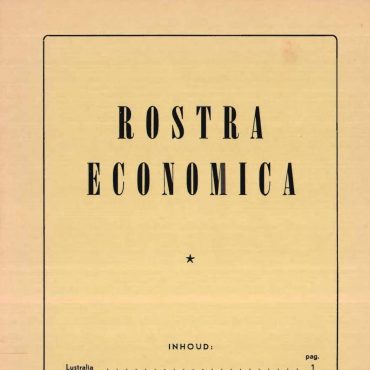
Rostra Economica was founded in May 1953. The initiative was taken by SEF, the student association of the Economics faculty at the UvA. At the start, Rostra only existed in physical form and published a printed edition four times a year. Carried around by UvA economics students, the magazine was not only a place to reflect on, criticise and discuss the faculty and the news, but also to advertise your startup, find yourself a tutor and get inspired by a collection of quotes from the seniors’ theses. With contributions from the professors, Rostra Economica was a connection between the students and the university.
A decade later, in 1965, the students of the UvA and the VU decided to cooperate, hoping to keep the project financially feasible. The magazine took on a more theoretical look, often explaining current and economic theories through mathematics-heavy lenses. With new content came a new name: Rostra Economica Amstelodamensis. The seriousness didn’t stop the publishers from having fun in advertisements, though: “Just notice how much Heineken Beer awakens statistical and static Dutch people to live a dynamic life!” a 1966 issue on John Maynard Keynes said. In the 60s, UvA students received in their mail a funnier and more engaging version of academic essays.
In the 1970s a new era came: the magazine returned to the UvA and became an announcement bulletin for the Economics Faculty. Listing the number of graduates, doctorates, Memento Mori notes and short remarks, the name also became short and concise: Rostra. Now the students were putting a summary list into their bags.
Just a couple of years later, in 1973, Rostra went through another rebranding: the magazine became much more creative, gaining graphical and colourful drawings on the covers, rebuses, puzzles and sketches inside, and creative ideas in the paragraphs. Rostra started covering topics from economic sociology to the Vietnam War. And, named Rostra Economica again, the magazine took a step towards the content it prides itself on today.
The 80s were an engaging time for Rostra Economica: discussions of emancipation, the USSR, minority rights and the success of comic books filled the pages of the magazine, and in 1981 Rostra celebrated its 100th edition. It was no longer a space restricted by economic theories, but rather a creative field made to freely express interests.
In the 90s colour came to print, and Rostra created its iconic red-black-white look — just like Mickey Mouse, who appeared on the cover of the 1991 issue on the economic structure of Disney. Rostra has been evolving both as a magazine and as a student organisation: in 2003 Rostra celebrated its 50th anniversary, in 2010 Rostra Economica was published in English for the first time, and in 2015 the first article was published on the newly made website. Now, all students need to do to gain access to interesting and captivating articles is look up Rostra Economica online.
We strive to make Rostra inclusive, insightful and inspirational, and to make it not just an engaging magazine to carry around, but an academic community that will be a pillar of student life at the FEB. We hope that our website, social media, meetings, collaborations and printed editions — now published in both Dutch and English — will make our goals come true.
Even though a lot has changed throughout the history of the magazine, one thing has stayed constant. Rostra Economica is made by and for students, and will remain so regardless of the platform, standing as a magazine with a rich history and a bright future.
Testimonial
(Rado) Teijo Redmer Baarda — Editor-in-Chief / Chairman of Rostra Economica, 2020–2021
“Rostra Economica, which prides itself on being the oldest university magazine in the Netherlands, forms the perfect complementary activity while studying at the University of Amsterdam. It gives its student-writers the opportunity and platform to creatively express their ideas regarding contemporary issues in the worlds of politics, business and economics. Additionally, the newspaper aims to cultivate a close peer-to-peer organisational structure that improves the quality of one’s writing.
Perhaps the sales speech above is already enticing you to sign up, but in case you still find yourself on the fence, let me briefly explain how Rostra shaped my university experience. Personally, I joined the organisation as a regular editor/copy-editor at the beginning of the second year of my Bachelor. My goal in doing so was to improve my ability to formulate my opinions and gain deeper insight into current events. Man, did I underestimate the benefits! Not only did I, in my oh-so-humble opinion, accomplish the above, but I also gained a far larger “mastery” of the English language. These improved skills were often put to use in university essays, which made them invaluable. Furthermore, membership in such a tightly knit organisation motivates a person to do whatever is in their ability to see it succeed — and those growth opportunities are available. This led me to first take the position of Head Columnist of North America and later that of Editor-in-Chief.
Are you an ambitious student who enjoys writing and wants to share their opinion with the world? Do you believe that the foundational principle of the university experience is finding truths through the freedom to think and speak? If so, look no further: apply to Rostra!”